 US Dollars

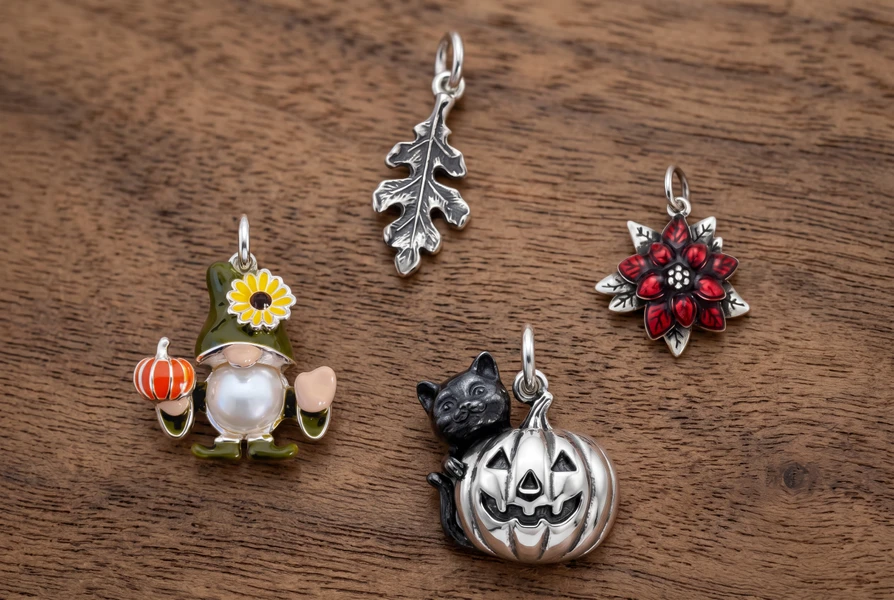
Silver is luminous by nature — bright, reflective, and cool. But some of the most beautiful silver jewelry you'll ever see isn't purely silver-white. It's layered with shadow, accented with color, its details made visible by contrast. Two techniques make that possible: oxidation and enamel. They work differently, look different, and serve different purposes — but both are expressions of the same idea: that the right finish doesn't just cover a piece of jewelry. It completes it.
Oxidation: Embracing the Dark
Patina refers to a surface treatment intentionally applied to a piece using chemicals — rather than the natural long-term aging of silver. The cause is surface oxidation, whether chemically induced or caused by prolonged air exposure.
The most common agent used in the silversmith's workshop is liver of sulfur — a compound that reacts with the surface of silver to create a range of tones from warm gold and bronze through to deep black, depending on concentration, temperature, and application time. It can create an antiqued look, enhance texture and details in a design, and completely change the appearance of shiny white silver to dark.
The technique is deceptively simple in principle: the piece is cleaned thoroughly, submerged or painted with the solution, and then — once the desired depth of tone is reached — neutralized to stop the reaction. What happens next is where the real artistry lies. Because patina can also highlight flaws, all finishing work should be completed before it is applied. The oxidized piece is then selectively polished: raised surfaces are brought back to bright silver, while recessed areas retain their darkness. The result is a piece with genuine visual depth — details that would otherwise flatten into the surface suddenly pop with contrast.
At Breakell, selective oxidation is used to bring out the fine detail in many of our more intricate designs. A bumblebee, a sea creature, a detailed leaf — these are pieces where the craftsmanship lives in the texture, and oxidation is what makes that texture visible.
A note on care: Oxidized silver will gradually lighten with wear, particularly on raised surfaces, as friction polishes the darkened areas back toward bright silver. This is natural and often beautiful — the piece develops character over time. A professional re-oxidation can restore the original contrast when desired.
Enamel: Painting with Glass and Light
Enamel is among the oldest decorative arts in human history, and one of the most visually striking. At its heart, enamel is glass — ground to powder, colored with metallic oxides, and fused to metal. The result is a surface that catches light in a way that no paint, dye, or coating can replicate.
There are several classical enamel techniques, each creating a different relationship between the metal and the glass:
Cloisonné — Fine silver or gold wires are formed into cells (cloisons) on the metal surface, then filled with enamel. The wires become part of the design, creating defined boundaries between colors. The effect is precise, jewel-like, and unmistakably handcrafted.
Champlevé — Rather than adding wire walls, the silversmith carves or etches recesses directly into the metal, which are then filled with enamel and fired. This technique creates recesses in the metal to then add enamel using the wet packing technique. The metal itself becomes the frame.
A word on metal compatibility: Enameling is most commonly done on copper, fine silver, and 18ct or 22ct gold. Alloys containing zinc or nickel are unsuitable, as the enamel tends to react and not fuse properly to the surface. Sterling silver presents its own challenges for traditional enamel — its copper content requires careful preparation — which is why skilled silversmiths who work with enamel on sterling are particularly valued.
Cold Enamel: A Modern Alternative
For contemporary jewelry making — including pieces designed for everyday wear — cold enamel offers significant advantages. Cold enamel is a resin-based material, typically a two-part epoxy system mixed with specialized pigments, that hardens at room temperature rather than requiring high-temperature kiln firing. This allows for precise color application and intricate detailing without the risks associated with heat.
Cold enamel offers a wider color palette and enhanced durability for everyday wear, making it an ideal choice for pieces that need to stand up to regular use.
Two Techniques, One Goal
Oxidation and enamel approach color and depth from opposite directions. Oxidation works with darkness — using shadow and contrast to reveal what's already there in the silver's surface. Enamel works with light — adding color and translucency that the metal alone could never achieve.
Together, they represent the full spectrum of what a silversmith can do once the casting and soldering are done. The piece is complete. Now it becomes itself.
Explore our handcrafted sterling silver collection at breakell.com, or visit us at 215 Goddard Row in Newport's historic Brick Market.
