 US Dollars

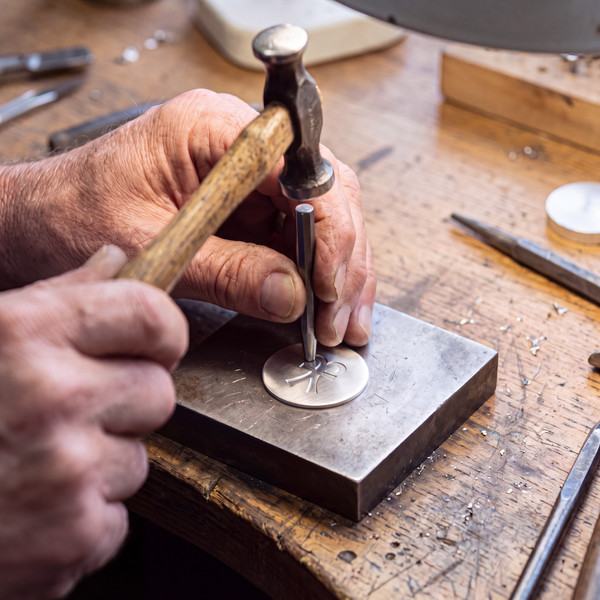
Turn over almost any piece of fine jewelry and you'll find it: a small stamp, sometimes so tiny it requires a loupe to read. Most people never look. But that mark tells you something important about what you're holding — and in the case of a handcrafted piece, it tells you who made it.
What Is a Hallmark?
A hallmark is a stamp applied to a piece of jewelry to certify the metal's composition. The tradition dates back to medieval Europe, when guilds took charge of marking pieces to guarantee quality and trace origins — turning silversmithing into a revered craft and protecting buyers from fraud.
Today, hallmarks serve the same essential purpose: they're a promise about what the metal actually is.
The Marks You'll See on Silver
925 — The most familiar mark on sterling silver jewelry, the 925 stamp signifies that the piece is 92.5% pure silver, with the remaining 7.5% composed of other metals, typically copper, added for strength and durability. You may also see this written as “.925” or “S925.” In the United States, you may also see the word STERLING stamped in full — both mean the same thing.
Pure silver (999 or Fine Silver) is softer and more malleable than sterling, and less commonly used in jewelry because it's prone to scratching and bending. Sterling silver's small copper addition solves this without compromising the beauty of the metal.
Plated silver carries marks like EPNS (electroplated nickel silver) or is sometimes sold without any silver mark at all. It is not sterling silver — the silver coating sits over a base metal and will wear away over time. When in doubt, look for 925.
The Marks You'll See on Gold
14k or 585 — 14 karat gold is 58.3% pure gold. At Breakell, this is the gold standard we work with — it balances purity, warmth, and durability beautifully.
10k or 417 — 41.7% pure gold. More durable but less rich in color.
18k or 750 — 75% pure gold. More lustrous, but softer and more expensive.
What Is a Maker's Mark?
Beyond the purity stamp, many fine jewelry pieces carry a maker's mark — a unique stamp that identifies who created the piece. The goldsmith or silversmith who crafted the jewelry may stamp their initials, a symbol, or a registered mark to identify their work. In the United States, maker's marks are not federally required, but they are a hallmark (so to speak) of quality craftspeople who want their work to be traceable and accountable.
What Our Mark Means
Every J.H. Breakell & Co. piece carries our maker's mark — stamped by hand in our workshop. It's small. You may need good light to find it. But it's there on every piece, and it means something specific: this was made by a skilled silversmith, to our standards, and we're willing to put our name on it.
It also backs our warranty. The mark isn't just identification — it's accountability.
When you're shopping for jewelry — whether from Breakell or anywhere else — look for the mark. A piece with a clear purity stamp and a maker's mark tells you something important: the person who made it wasn't hiding.
Shop our full collection of hallmarked, handcrafted sterling silver and 14k gold jewelry at breakell.com, or visit us at 215 Goddard Row in Newport's historic Brick Market Place.
References:
Gabriel & Co. Blog — "Sterling Silver Marks on Jewelry: Complete Hallmarks Guide"
Jewelry-Auctioned.com — "A Complete Guide to 925 Stamps & Other Jewelry Hallmarks"
